

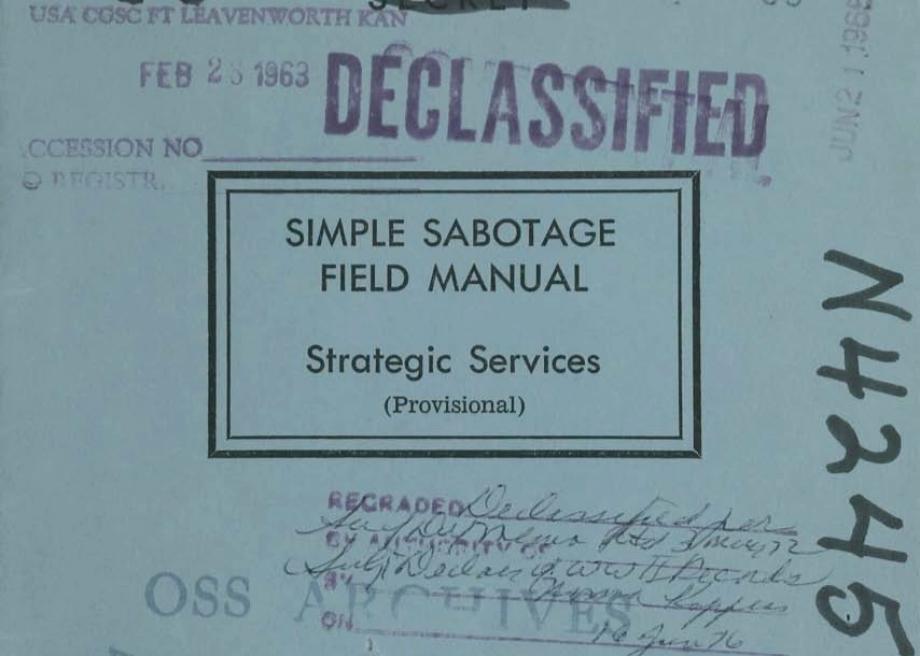
In 1944, the Office of Strategic Services (OSS)—the wartime precursor to the CIA—developed a guide with an unexpected purpose: the “Simple Sabotage Field Manual.” Its original aim was to subtly disrupt Axis operations during WWII, but decades later, this manual has resurfaced as an eye-opening mirror for modern corporate life. Surprisingly, it reveals how routine behaviours can inadvertently (or intentionally) undermine an organisation’s goals. As we explore this manual, let’s reflect on how small acts of “sabotage” might exist within our own workplaces, blocking progress and misaligning us from our mutual interests.






The Playbook of Disruption: Tactics That Stall Progress
Here are some key tactics from Section 11 of the “Simple Sabotage Field Manual,” adapted for today’s office environments.
Notice how familiar they might feel:
- Insist on rigid adherence to procedures, discouraging any shortcuts.
- Deliver lengthy, frequent speeches, taking up time without adding value.
- Refer decisions to committees, ideally with five or more people.
- Raise irrelevant issues often to sidetrack discussions.
- Debate trivial details in documents and communication.
- Revisit and rehash settled decisions.
- Over-emphasise caution to prevent “hasty” decisions.
- Question decision-making authority and suggest involving higher-ups.
- Demand written instructions for all tasks.
- Prioritise minor tasks over meaningful work.
- Require perfection in trivial matters, requesting rework for tiny flaws.
- Provide incomplete or misleading instructions to maintain control.
- Praise underachievers while holding high standards for top performers.
- Call meetings or conferences during crucial work times.
- Increase paperwork and duplicate processes unnecessarily.
- Add approval layers for simple tasks.
- Adhere rigidly to all regulations, however impractical.
- Spread unsettling rumours to sow doubt.
- Withhold skills or knowledge from colleagues.
- Communicate in overly complex, jargon-laden language – “management consulting speak.”




Originally intended to sabotage enemy production, these tactics feel eerily familiar in the modern workplace. While I acknowledge the importance of good corporate governance and the checks it provides, I also believe these behaviours can drain productivity, morale, and innovation if left unchecked.
In most cases, these behaviors aren’t intentionally malicious but rather symptoms of outdated management practices, insufficient training, or bureaucratic inertia. However, whether deliberate or not, their cumulative effect on companies and employees can be remarkably corrosive, leading to inefficiency, frustration, and a lack of trust in leadership.
Rethinking Workplace Habits
As you consider these “sabotage tactics,” reflect on your own work environment:
- Have you observed similar patterns in your workplace? Could they be subtly undermining success?
- What practical changes might help counteract these behaviors?
- With the rise of remote work, how have these habits evolved – and have any new ones emerged?
The choices we make in how we lead and collaborate matter. If we can recognise and address these tendencies, we can foster a culture that encourages efficiency, empowerment, and alignment with both company and stakeholder interests.
For those interested in exploring the full text of the Simple Sabotage Field Manual, you can read it here.